
MATERIALS OF TODAY

Same old residue.
New circular materials.

We’re turning rice straw into a family of useful products, connecting a seasonal agricultural surplus to the needs of farmers and industry. Our first three fractions are opening routes into soil regeneration, crop care, construction and bio-based chemistry.

01

Biochar

Green Gold Biochar Plus soil-amendment sack concept

This carbon-rich solid is being developed for soil inputs and concrete masonry. Formulation, material testing and application trials are matching each grade to a useful destination, with eligible long-term storage providing a pathway for carbon removal.


02

Bio-vinegar

Green Gold Bio-stimulant concentrate bottle concept

Also known as pyroligneous acid, bio-vinegar is the aqueous fraction recovered as pyrolysis vapours condense. Crop-care formulations are progressing through chemical characterisation, safety testing and controlled field trials, working towards a useful addition to familiar agricultural inputs.

03

Tar oil

Green Gold tar oil bio-bitumen binder 200-litre steel drum concept

The heavier organic fraction is opening a route into road-binder blends and specialty derivatives. We’re examining separation, handling and formulation so this part of the harvest can meet industrial specifications and serve as an input to bio-based chemistry.

Follow them home

MATERIALS OF TOMORROW

Rural Mining:A harvest of advanced materials.

Rice straw contains biogenic silica, not just carbon. Our recovery and purification research is opening routes into this mineral resource, turning a processing challenge into a material that can meet demanding industrial specifications.

14SiSilicon
6CCarbon

OUR FIRST FOCUS MATERIAL

Green silica.

We’re working on selective recovery and purification from rice straw. The route takes a silica-bearing fraction into a silicate solution, separates insoluble material, then precipitates, washes and dries the recovered silica.

Control over these steps shapes the particle structure and surface properties needed for different applications. Silica is silicon dioxide, SiO₂. Making elemental silicon for anodes requires a further reduction and purification route.

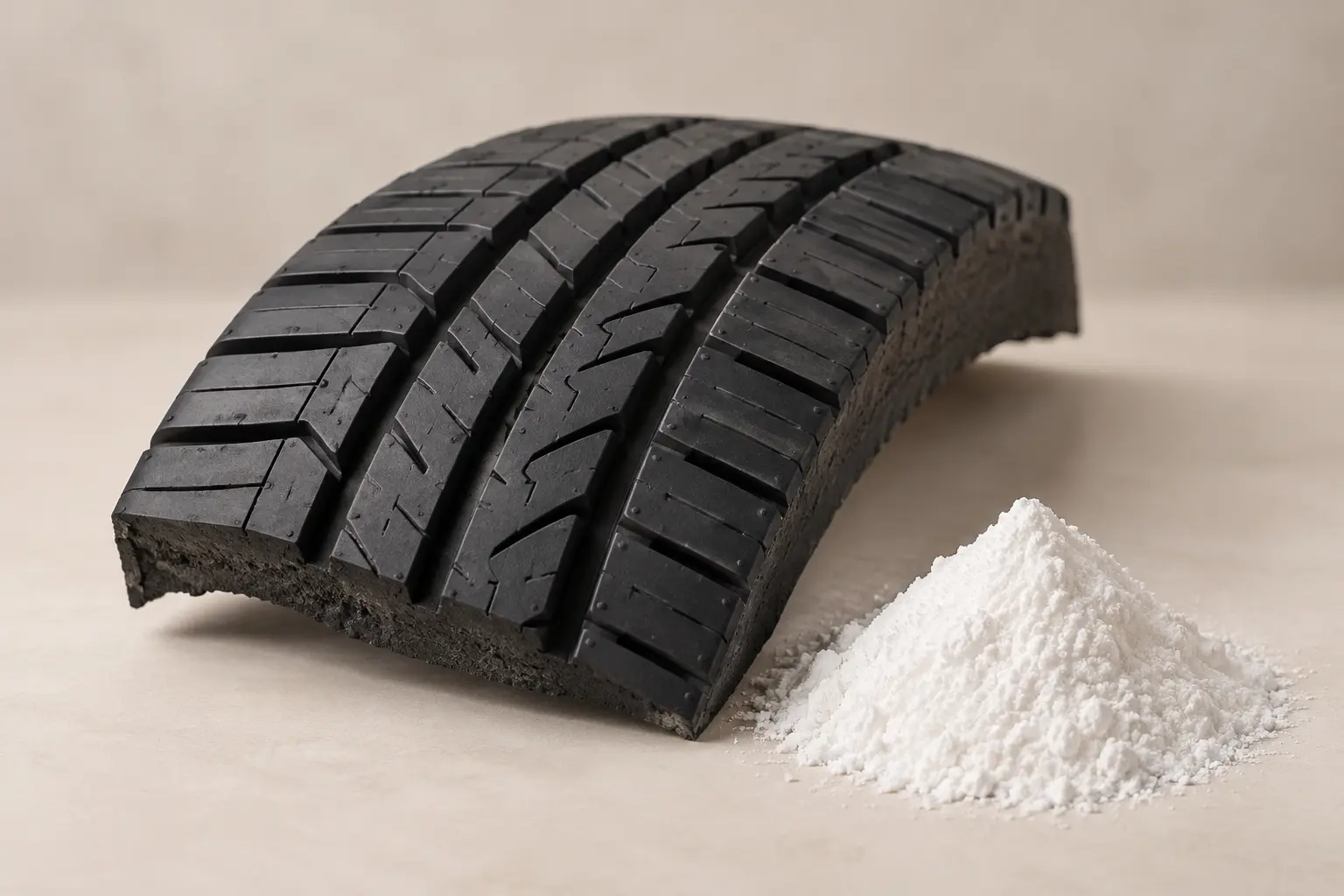
Illustrative application: a tyre-tread sample alongside white precipitated silica
Precipitated silica serves as a reinforcing filler in tyre-tread formulations.

Tyres & technical rubber

Dispersed through rubber, precipitated silica reinforces the compound and helps balance wear, wet grip and rolling resistance. The result depends on how the silica interacts with the rubber and the rest of the formulation.

Paints & coatings

Silica particles scatter light to create a matt finish and can help control how a coating flows and settles. Different particle sizes and surface treatments serve wood finishes, decorative paints and protective coatings.

Adhesives & sealants

Suitable silica grades adjust body and flow so an adhesive bead holds its shape and a sealant resists sagging. Their structure and surface chemistry can also support the strength of the finished formulation.

A SECOND PATTERN IS EMERGING

2×

The AI economy needs more power.

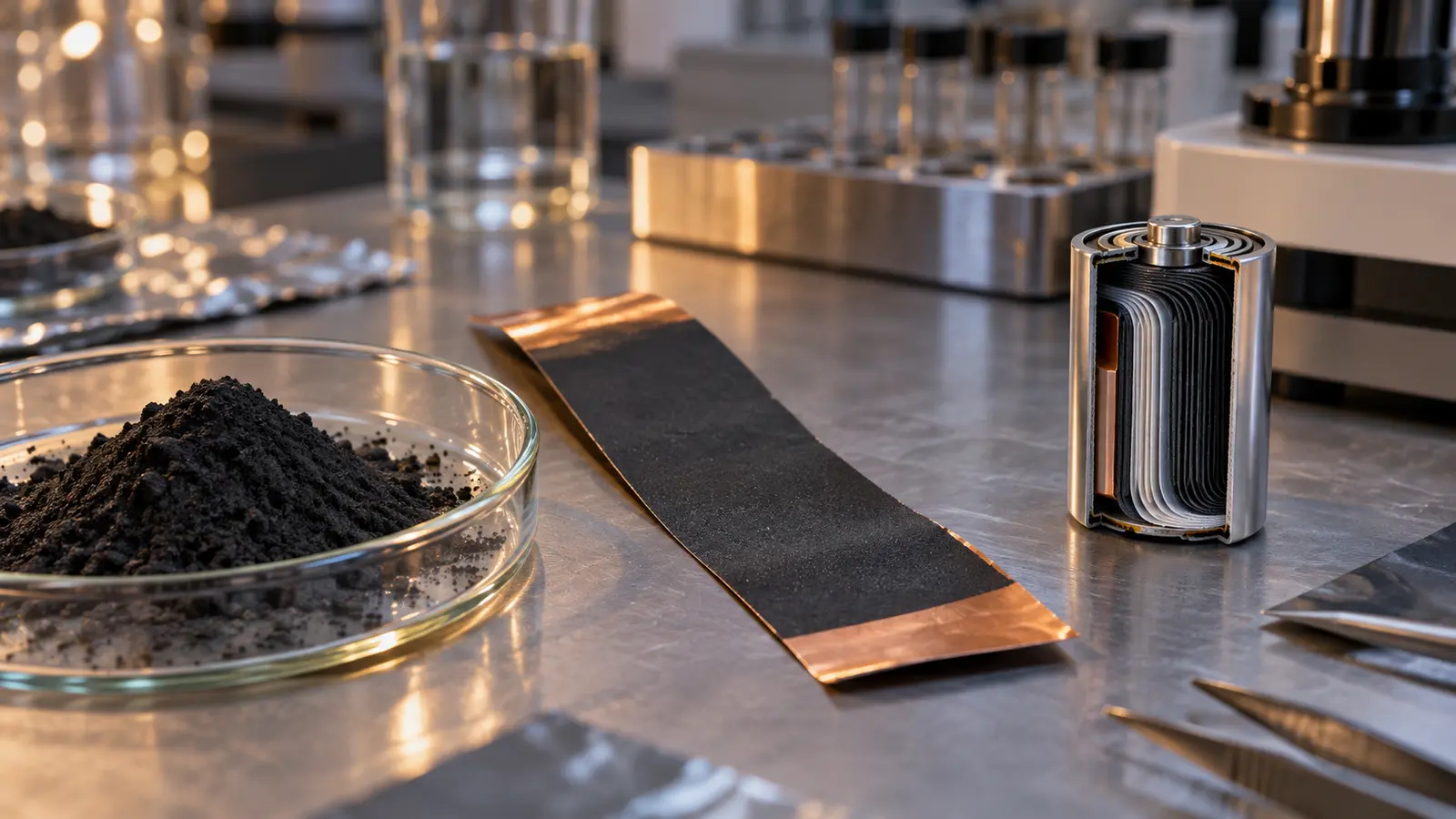
The IEA’s 2025 outlook projects global data-centre electricity demand to roughly double between 2024 and 2030. Reliable power is sharpening the search for next-generation anodes and other storage materials. We’re studying routes for energy-dense cells, affordable stationary storage and rapid power buffering.

IEA outlook, 2024 to 2030
Illustrative materials laboratory with carbon powder, an electrode and an experimental cell

From lab to market.

  1. LAB

    Establish the material.

    Recovery yield, impurities and performance are being examined alongside the water, reagents and energy each route requires.

  2. PILOT

    Make the result repeatable.

    Pilot runs will establish whether laboratory results hold at larger scale: consistent batches, reliable material handling and equipment that can operate over sustained campaigns. Those runs will also reveal the production cost and engineering changes needed before commercial deployment.

  3. MARKET

    Meet a working specification.

    Application trials, repeatable production and customer acceptance will guide the path from development to a working product.

Bring us a material challenge.

A specification, an application, a problem worth solving. Let’s work on it together.

Carbon with a purpose.A future with less of it in the air.

Explore carbon removal