Amritsar
Home to the Golden Temple, Amritsar carries the Sikh tradition of seva: service offered without distinction. We bring that spirit to Punjab’s rice belt, connecting straw collection, agricultural return and local industry.
 GREEN GOLDBuild with us ↗
Amritsar, Kurukshetra and Ayodhya. Three places shaped by service, duty and renewal, at the heart of the farming landscapes we’re working to regenerate.

Home to the Golden Temple, Amritsar carries the Sikh tradition of seva: service offered without distinction. We bring that spirit to Punjab’s rice belt, connecting straw collection, agricultural return and local industry.
The land of the Mahabharata and the Bhagavad Gita, Kurukshetra carries a lasting call to duty and purposeful action. In this major rice-growing belt, we’re connecting collection networks, farmers and nearby industry.
Revered as the birthplace of Ram and central to the Ramayana, Ayodhya connects cultural inheritance with responsibility for the future. Our work adapts the refinery model to eastern Uttar Pradesh’s farming landscape.
We’re in conversation with the state governments of Punjab, Haryana and Uttar Pradesh on policy, programmes and pilot projects. Our proposed Public Private Partnership (PPP) approach brings public coordination and agricultural programmes together with Green Gold’s technology, project development and operating capability. The aim is a shared delivery plan for straw collection, local production and the return of useful products to farming communities.
We’re integrating monitoring, reporting and verification (MRV) around the full carbon journey: field evidence, plant measurements, storage records and an independently checked account. Baselines, lifecycle emissions, monitoring and carbon rights are being connected before a carbon removal credit can be issued.
GG Drishti · sourcing
We’re mapping the catchment and connecting each source to its supplier, custody record and evidenced alternative fate.
The aim is a reviewable account with no missing handoffs: quantities balance, discrepancies are resolved, and each claim has a clear evidence trail.
BUYER DILIGENCE
Our buyer diligence work brings together the project evidence needed to assess delivery, follow milestones and understand the basis of each tonne.
Site control, sourcing coverage and a commissioning plan tied to delivery milestones.
An evidenced baseline, sample custody, laboratory assays and net lifecycle accounting.
Qualified destinations, transfer records, application evidence and reversal monitoring.
Carbon rights, independent verification, followed by registry records when issued.
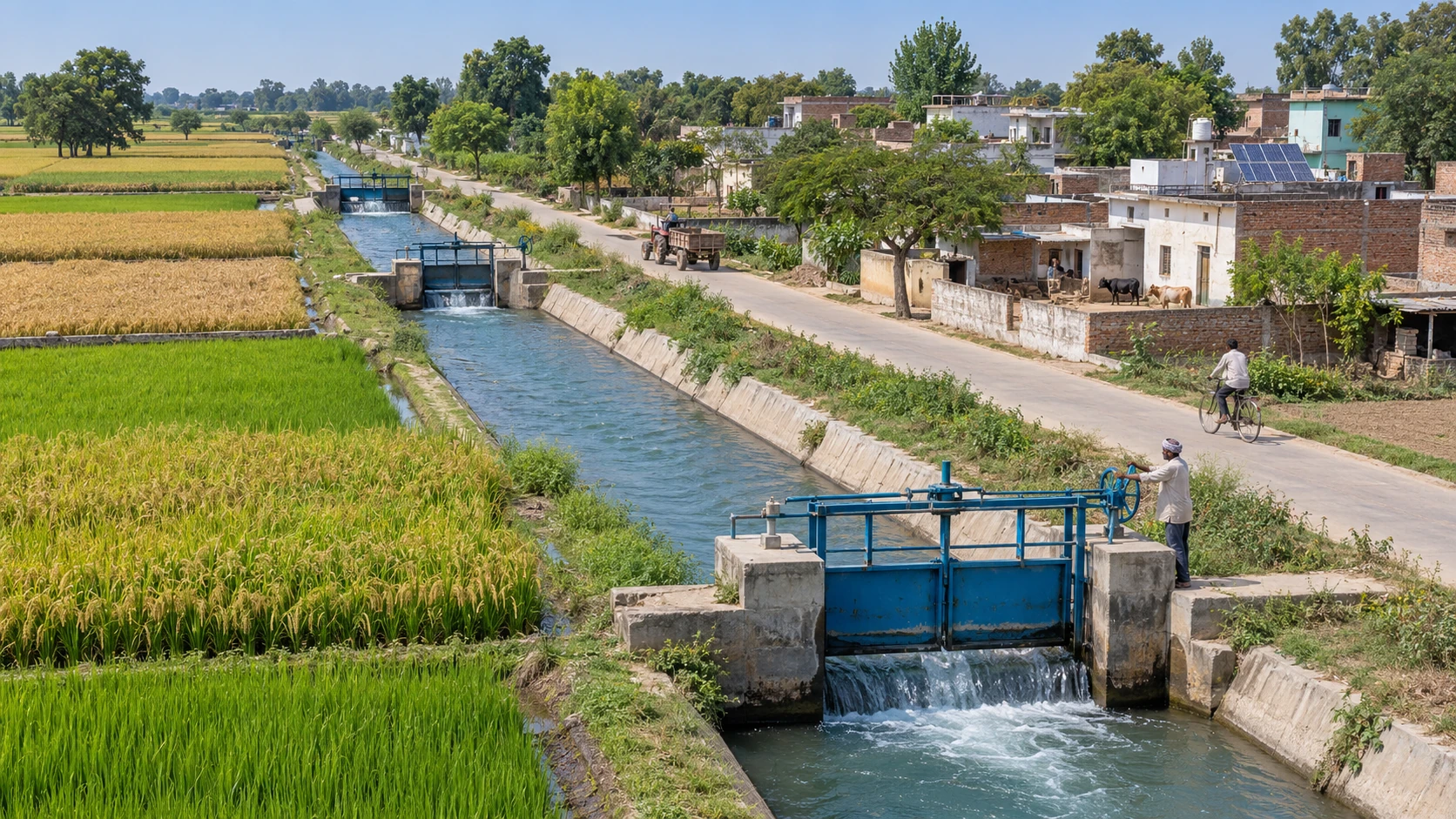
The project is being designed to return meaningful value to its catchments as well as the larger community. These are the local outcomes our programme will track.
Straw diversion and seasonal burn records will show whether reliable collection is reducing open burning within each catchment.
Biochar improves soil structure, adds organic carbon, and supports microbial biodiversity and nutrient uptake for agricultural resilience.
Soil-moisture and irrigation records will help us assess water needs through the growing season and measure savings.
Our monitoring plan follows straw payments and local work, alongside the value of agricultural inputs returning to the community.
The farmer relationships, field records and industrial partnerships we’re building can also support adjacent carbon and superpollutant-reduction pathways. Each is being assessed on its own merits, with separate accounting and no double-counting of biochar carbon removals.
Alternate wetting and drying (AWD) introduces controlled dry intervals, while Direct Seeded Rice (DSR) can reduce the period of flooding when established and managed under suitable conditions. Both offer routes to curb methane, a powerful short-lived superpollutant. Farmer support, crop calendars and water-level records can make these practices traceable, with trials tracking yield, irrigation and nitrous oxide. These are emission reductions, distinct from carbon removal.
We’re looking into locally suitable crop rotations, residue management and organic inputs that could build native soil carbon. Agronomic support, baseline sampling and repeat measurements are the foundations for tracking change, with sampling uncertainty and reversal risk accounted for. Native soil-carbon change stays separate from the carbon added as biochar.
Partnerships for bioenergy with carbon capture and storage (BECCS) are under assessment, including geological storage and mineralisation in reactive rock or qualified mineral feedstocks. Capture, purification, transport and storage must demonstrate net lifecycle carbon removal, with permits and independent verification. CO₂ use alone is not carbon removal.